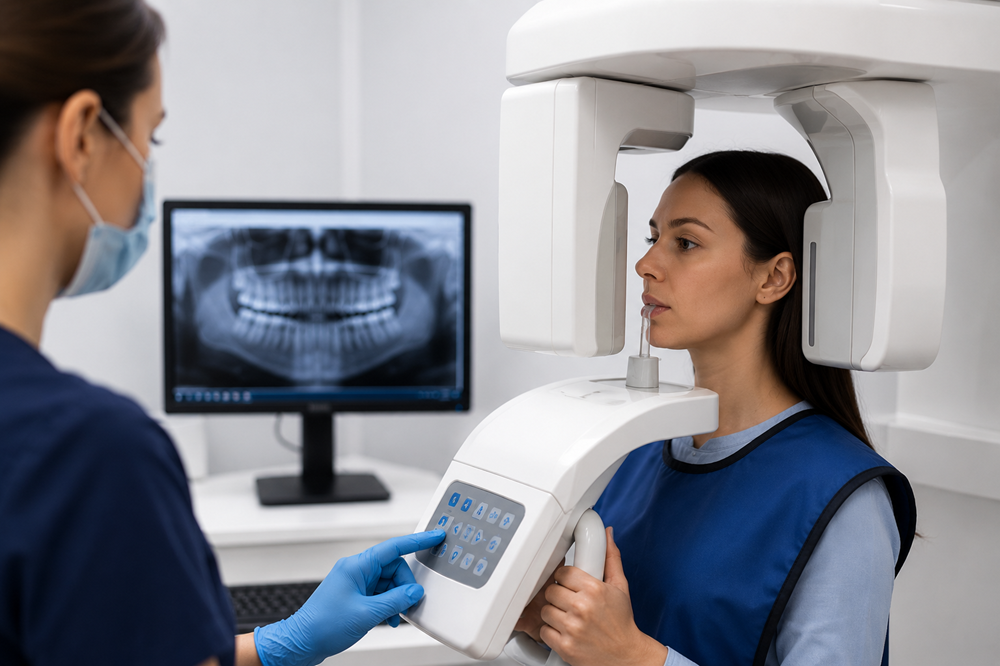
When you visit a dental office, getting images of your teeth is a standard part of checking your oral health. If you are looking into the safety of modern imaging options, you might look for clinics that offer digital X-rays near you to see how the technology works. A common question many people ask is whether these modern imaging systems cause health side effects.
Understanding how radiation works in dentistry can help ease your mind. Modern dental imaging is designed to be highly focused and uses minimal energy to capture clear pictures of your jaw and teeth.
What Are Digital X-Rays?
Earlier, dental X-rays used film and needed chemicals to develop the images. Now, most dental offices use digital sensors connected to a computer. The small sensor is placed in your mouth and captures clear images of your teeth instantly.
Dentists rely on these electronic images to check for specific issues that remain hidden during a visual examination. These issues include:
- Small areas of decay forming between your teeth.
- Infections develop at the very tip of a tooth root.
- The loss of bone density in your upper or lower jaw.
- The exact position of teeth that have not broken through the gums yet.
Do Digital X-Rays Have Side Effects?
The short answer is that digital imaging does not cause noticeable side effects or short-term physical symptoms. You will not feel any pain, warmth, or unusual sensations while the machine captures the image.
The main topic of discussion with any imaging equipment is radiation exposure. Every person experiences natural background radiation daily from sources like soil, sunlight, and even regular air travel. A routine set of digital dental images exposes you to a very minor dose of radiation that is lower than the amount you naturally absorb during a typical day of regular life. Because electronic sensors are very sensitive, they require up to 80% to 90% less radiation than old-fashioned film systems to produce a clear image.
How Do Dental Teams Keep Radiation Risks Low?
Dental offices follow standard safety protocols to keep your exposure minimal. Even though the radiation levels are low, teams take precautions to handle the equipment responsibly.
Using Precise Settings
Modern equipment can be adjusted to limit the size of the beam so it only hits the specific area of your mouth that needs to be checked. Dentists also lower the power settings based on the size of the patient, using smaller doses for children than for adults.
Only Taking Images When Necessary
Dental professionals do not take images at every single appointment without a clinical reason. Your specific schedule depends on your current oral health status, your age, and your history of cavities or gum disease.
Protective Shielding Options
Your dental team may place a heavy apron or a collar over your chest and neck before taking the picture. This simple shield blocks the minor radiation from reaching other areas of your body.
Are Digital X-Rays Safe During Pregnancy?
If you are pregnant or think you might be, always inform your dental team before any treatment. Routine X-rays are often postponed until after delivery as a precaution.
However, if you have severe tooth pain or swelling, an X-ray may still be needed to diagnose the problem safely. The radiation used in dental X-rays is very low and is focused only on the mouth area, so the risk to the baby is extremely small.
When an urgent X-ray is required, a protective lead shield is used over your abdomen for added safety.
Why Is Skipping Dental Images a Risk?
Choosing to avoid diagnostic images out of fear can lead to complications for your oral health. Many serious dental conditions develop quietly beneath the surface without causing any initial pain.
If the images aren’t clear enough, a dentist may miss problems such as bone loss, infection, and decay under old fillings. Failure to identify these problems early on will mean that they worsen and require more intense procedures, such as root canals or even tooth extraction. Using modern digital X-rays helps find problems early and keeps treatment simple and easier to manage.
When you visit a trusted dentist near you, the team can review your history and answer your questions about modern technology.
Schedule Your Next Dental Visit
If you require a check-up or have any concerns regarding your teeth, give us a call to schedule an appointment. Our dentist in Sarasota uses advanced equipment for examining your teeth in a safe and comfortable way.
Let Gulf Gate Dental maintain your healthy teeth.
FAQS
How often do you need to get dental X-rays?
The frequency of your dental images depends entirely on your personal history of decay, your age, and the current condition of your gums.
Can digital X-rays cause tissue damage?
The radiation dose used during modern digital dental imaging is too low to cause cell or tissue damage.
Are digital X-rays safer than traditional film ones?
Digital systems are safer because they use up to 90% less radiation than traditional film imaging to create high-quality pictures.
Do children need dental X-rays more often than adults?
Children sometimes need images more frequently so the dental team can monitor the growth of permanent teeth and catch fast-moving decay early.